
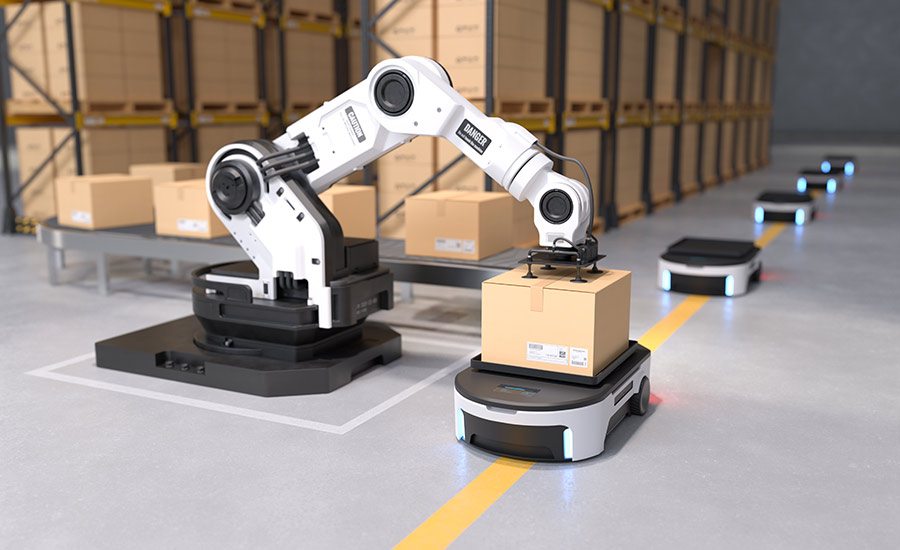
The global supply chain is undergoing rapid transformation with the integration of advanced robotics in warehouse management. As e-commerce, retail, and logistics demand faster, more accurate, and cost-effective solutions, robotics is reshaping warehouse operations by automating material handling, inventory tracking, and order fulfillment. Robotics-driven warehouses not only improve efficiency but also enhance safety, scalability, and overall operational resilience.
Types of Robotics Used in Warehouse Automation
1. Autonomous Mobile Robots (AMRs)
- Navigation & Flexibility: Unlike traditional automated guided vehicles (AGVs), AMRs use AI and sensors for real-time navigation without the need for predefined paths.
- Pick-and-Place Operations: Robots like Locus Robotics and Fetch Robotics streamline warehouse picking, reducing human effort.
- Real-Time Adaptation: AMRs adjust routes dynamically based on traffic and workload, improving efficiency.
2. Automated Guided Vehicles (AGVs)
- Fixed Path Transport: AGVs follow magnetic strips or predefined routes for moving goods between warehouse zones.
- Material Handling & Pallet Transport: Commonly used for heavy load transportation, reducing reliance on forklifts.
- Use in Large-Scale Warehouses: AGVs are ideal for high-volume fulfillment centers requiring predictable movement patterns.
3. Robotic Arms for Picking & Sorting
- AI-Powered Precision: Industrial robotic arms, equipped with computer vision and AI, can pick, pack, and sort items at high speeds.
- Bin-Picking Automation: Robots like RightHand Robotics use grippers and suction to handle a variety of objects.
- Error Reduction: Reduces mis-picks and misplacements, ensuring accuracy in order fulfillment.
4. Drone Technology for Inventory Management
- Aerial Scanning & Monitoring: Drones equipped with RFID scanners or barcode readers conduct inventory audits without human intervention.
- Stock Tracking & Reconciliation: Reduces the need for manual cycle counting and increases inventory accuracy.
- Warehouse Surveillance: Drones monitor security and ensure compliance with storage regulations.
5. Automated Storage and Retrieval Systems (AS/RS)
- Vertical & High-Density Storage: Maximizes warehouse space through automated shelving and robotic retrieval.
- Rapid Item Retrieval: Used in fulfillment centers to quickly locate and retrieve products, speeding up order processing.
- Seamless Integration with AMRs & AGVs: Works alongside other robotics systems to optimize supply chain efficiency.
How Robotics is Revolutionizing Warehouse Operations
1. Enhancing Order Fulfillment Speed & Accuracy
- Robotics ensures faster picking and packing, reducing human errors in order processing.
- AI-driven robotics systems predict demand fluctuations and optimize inventory placement for rapid fulfillment.
2. Reducing Labor Costs & Addressing Workforce Shortages
- Robotics minimizes dependency on manual labor, reducing operational costs.
- Automated solutions compensate for the shortage of skilled warehouse workers, ensuring uninterrupted supply chain processes.
3. Improving Workplace Safety
- Robotics eliminates the need for human workers to lift heavy loads or operate in hazardous conditions.
- AI-driven safety protocols reduce collision risks, fatigue-related errors, and workplace accidents.
4. Maximizing Warehouse Space Utilization
- Automated storage and retrieval systems enable vertical stacking, making optimal use of available space.
- Robotics-based inventory management reduces wasted space by ensuring efficient stock organization.
5. Enhancing Scalability & Operational Flexibility
- AI-powered robotics allow warehouses to scale operations based on seasonal demand fluctuations.
- Robotics-driven fulfillment centers can adjust workflows dynamically without requiring additional human resources.
Challenges in Implementing Warehouse Robotics
1. High Initial Investment Costs
- Advanced robotics systems require significant capital investment, making adoption challenging for small businesses.
- Return on investment (ROI) depends on volume, efficiency gains, and operational scale.
2. Integration with Legacy Systems
- Many warehouses rely on outdated warehouse management systems (WMS), making robotic integration complex.
- Upgrading software and infrastructure is crucial for ensuring seamless robotics deployment.
3. Workforce Adaptation & Training
- Employees need training in robotics operations and maintenance to ensure smooth collaboration between humans and machines.
- The transition requires change management strategies to address worker concerns and skill gaps.
4. Cybersecurity Risks in Connected Warehouses
- AI-driven robotics are connected to cloud-based networks, increasing the risk of cyberattacks and data breaches.
- Secure encryption, access controls, and AI-driven threat detection are essential for protecting robotic infrastructure.
- AI-Driven Predictive Analytics: Robots will use machine learning algorithms to predict demand trends, optimize stocking strategies, and improve supply chain forecasting.
- 5G-Enabled Smart Warehouses: High-speed, low-latency 5G networks will enable real-time robotic coordination, enhancing warehouse efficiency.
- Autonomous Swarm Robotics: Future warehouses will deploy multiple synchronized robots working collaboratively for ultra-fast order processing.
- Human-Robot Collaboration (Cobots): The rise of collaborative robots (cobots) will ensure that humans and AI-powered machines work seamlessly together.
With advancements in AI, machine learning, and IoT, robotics is transforming warehouse management into a hyper-efficient, autonomous, and scalable ecosystem.